Home Author
Author

Avalynn Vanessa

Advertising

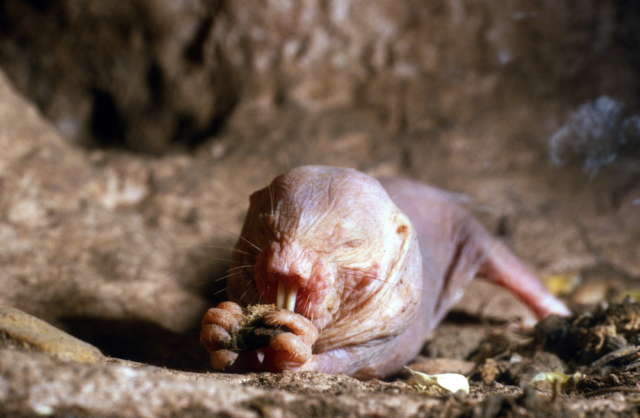
Naked shrews are unique creatures that challenge conventional wisdom about cancer and aging. Despite their unattractive appearance, these rodents have become famous for their long lifespans, reaching 30 years or more. The oldest recorded individual lived to be 39 years old, well beyond the average lifespan of most rodents.

The peculiarity of these animals is that they practically do not age according to the classic model of increasing mortality with age. Scientists associate this with the high level of high-molecular-weight hyaluronic acid, which shrews produce in large quantities. The HAS2 gene responsible for its formation was transferred to a mouse model, which improved the health of the mice and extended their life.

Pages: 1 2

Advertising

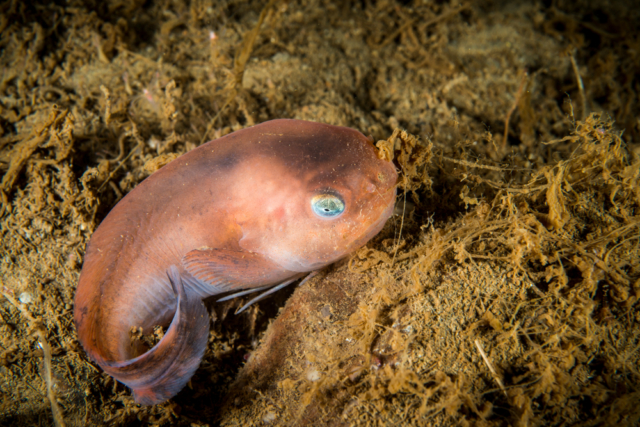
In 2019, scientists first captured footage of an unusual snailfish with large eyes and multiple rays on its pectoral fins at a depth of more than 3.2 km. It has now been confirmed to be one of three snail species new to science.

These include the pink bumpy Careproctus colliculi and two dark species, Careproctus yanceyi and Paraliparise. All were discovered in one of the most studied deep-sea zones on the planet.

Remarkably, two different species were captured on a single dive by the Alvin, highlighting how little we know about life in the deep ocean. These fish use their many fin rays not only to move, but also to sense their surroundings – through vibrations, smells and even taste.

Pages: 1 2

Advertising

It has long been believed that ice becomes slippery due to the pressure from shoes or skis, which melts the thin surface layer, and also due to friction. However, a new study by scientists from Saarland University challenges this idea.

It turned out that ice sliding is caused not by pressure or friction, but by the interaction of molecular dipoles of water in ice with materials, such as shoe soles. Water is a polar molecule with partial charges, forming an ordered crystal lattice in ice.

When in contact with the surface of the sole, the orientation of the dipoles is disrupted, forming “frustrated” interactions that destroy the order and create an amorphous, liquid-like film. It is this that causes sliding even at low temperatures – down to -40 °C, where lubrication was previously thought to be impossible.

Pages: 1 2

Advertising

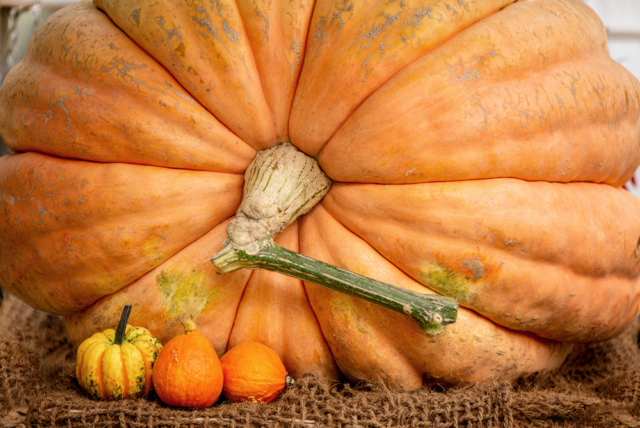
The development of giant pumpkins is the result of selective breeding: pollen from the largest plants is used to pollinate female flowers, producing seeds that can produce even larger fruits. However, heredity is not the only factor. The right soil, sufficient water (up to 1,890 liters per week in summer), moderate lighting, and room to grow also play a decisive role.

Harvard scientists have studied the internal structure of various varieties of giant pumpkins and discovered that the record-breaking fruits have a particularly well-developed vascular system responsible for transporting substances inside the plant.

Pages: 1 2

Advertising

The expedition will be the culmination of Walter’s Zero Emissions project, which aims to draw attention to human-caused climate change. The project has been ongoing for 17 years.

Walter is scheduled to set off from the port of Lagos in southwestern Portugal on September 15. He will first head south, through the Canary Islands and Cape Verde. Then he will head southwest along the Atlantic to his final destination, the port of Cayenne in French Guiana.

Pages: 1 2

Advertising

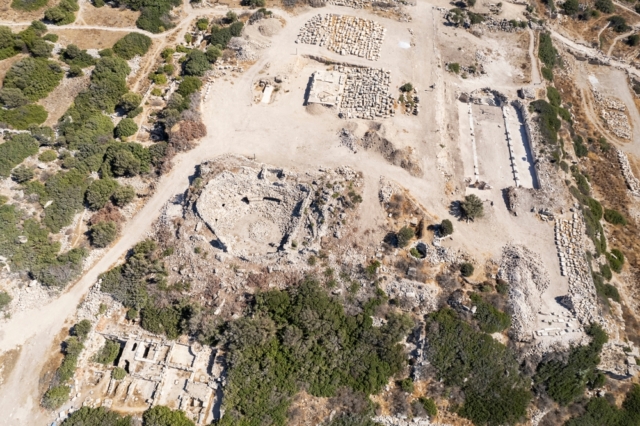
Archaeologists in Israel have unearthed a mosaic floor with the inscription “Peace to the Elders” in Greek, dating to the late 4th to early 5th century CE. The fragment was found in the ancient city of Hippos in Galilee and likely belonged to a building that served as a home for the elderly, one of the first institutions of its kind in history.

The mosaic is decorated with images of Egyptian geese, cypresses, fruits and vessels, while the alpha and omega symbols indicate the Christian origin of the object. What makes the find unique is that it is not a church or a wealthy home, but a social institution reflecting the community’s care for the elderly outside of family structures, possibly linked to the birth of the monastic way of life.

Pages: 1 2

Advertising

After five years of excavations, British archaeologists have discovered fragments of the 17th-century house where Isaac Newton’s mother, Hannah Ayscough, lived. It was located near Woolsthorpe Manor in Lincolnshire, the place where Newton was born and spent his childhood.

During the excavations, household items from that era were found: fragments of dishes, thimbles, buttons, parts of needles and bones with signs of meat processing. According to legend, it was under an apple tree near the house in Woolsthorpe that Newton came up with the idea of ​​gravity in 1666.

Pages: 1 2

Advertising

This is due to the finite speed of signal propagation and the vast distances in space. The crew finds itself in information isolation and is forced to rely solely on autonomous systems and their own decisions without the possibility of rapid data exchange or social contact with the home planet.

An additional difficulty is created by the effect of time dilation: for people on board, interstellar travel can take only tens of years, while for observers on Earth it stretches out over thousands or millions of years.

Pages: 1 2

Advertising

There is a popular theory that black holes may be tunnels or “wormholes” connecting different regions of space-time. However, modern theoretical studies point to the inconsistency of this model: the laws of physics do not allow a black hole to remain empty with a concentrated mass in the center, and attempts to construct a theory of “wormholes” violate the fundamental principles of consistency.

An alternative approach considers black holes as so-called “fuzzballs” within the framework of string theory. In this model, the mass of a black hole consists of entangled strings that fill its entire volume and radiate energy along with information.

Pages: 1 2

Advertising

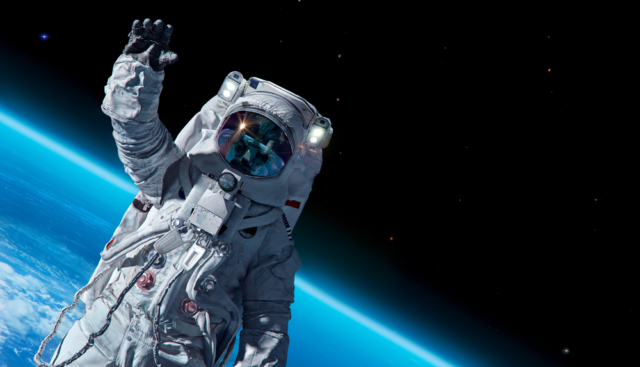
Spaceflight accelerates the aging process in astronauts’ blood-forming cells. Research shows that after several weeks on the International Space Station, blood stem and progenitor cells lose their ability to renew themselves effectively, accumulate DNA damage, and shorten telomeres—classic signs of cellular aging.

In microgravity, cells become overactive, come out of their protective resting state, and use up their resources faster. Additionally, mitochondrial stress signals and activation of previously “silent” regions of the genome are observed, which can weaken the immune system and increase the risk of disease.

Pages: 1 2

Advertising